
Containment first
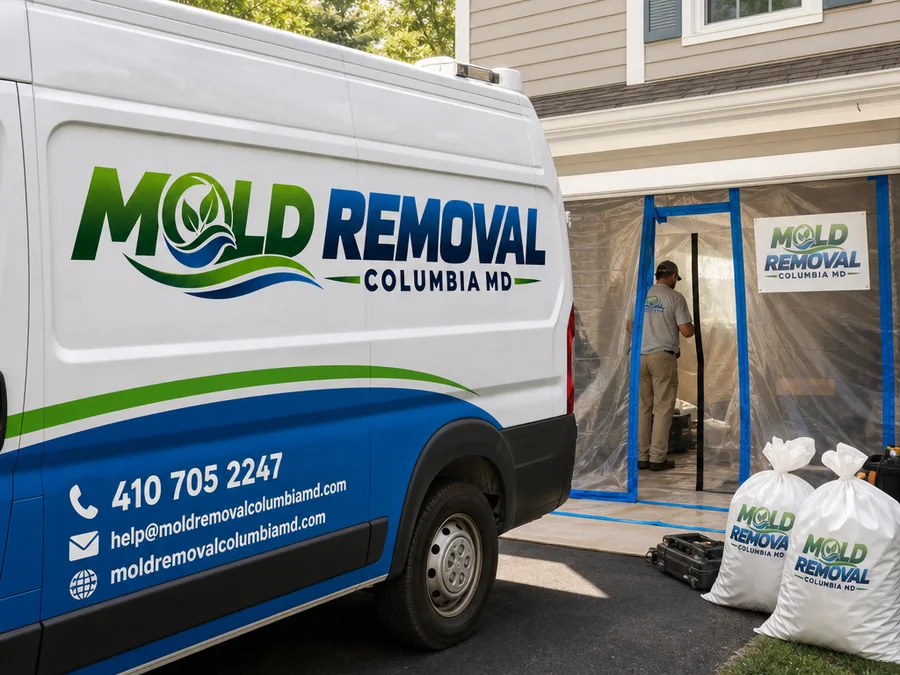
We isolate the work area with plastic sheeting and controlled access, then use negative air when appropriate to keep spores from drifting into clean rooms, hallways, and HVAC returns.
Serving columbia md & surrounding areas
Mon–Fri 8am–6pm · Sat 9am–2pm
If you smell mustiness, see staining, or have had a leak, we contain the affected area, remove mold safely, and clean the space so you can get back to normal with a clear scope and documentation.
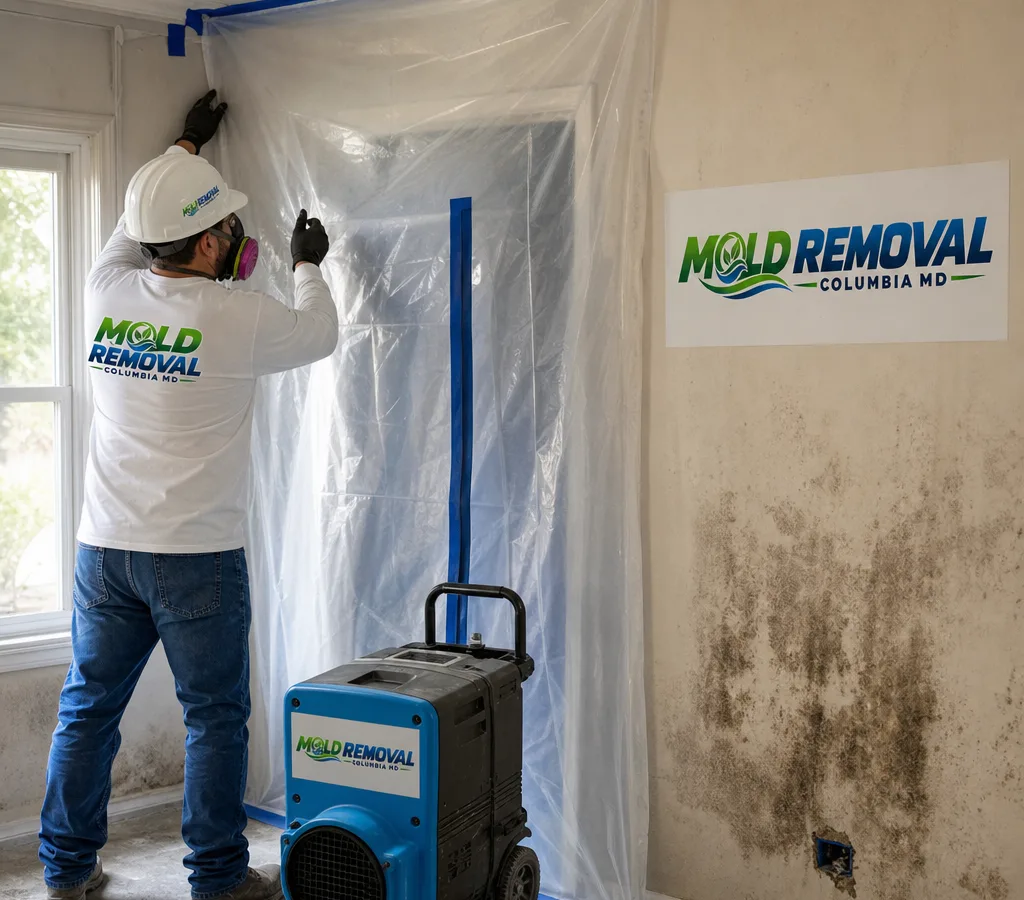
Containment, controlled removal, and detailed cleanup
Searching for mold remediation Columbia MD usually means you need two things fast: the mold handled safely and the moisture problem identified so it does not come right back.
Columbia Mold Pros provides mold remediation for residential and light commercial properties across Columbia (21044 and nearby). We focus on practical, jobsite-ready work: containment and negative pressure where needed, controlled removal of impacted materials, detailed HEPA vacuuming, antimicrobial cleaning, and guidance on drying and repairs.
A good plan should answer these questions in writing:
For a broader overview of related services and when remediation is appropriate, you can also review our Mold Removal information.
We isolate the work area with plastic sheeting and controlled access, then use negative air when appropriate to keep spores from drifting into clean rooms, hallways, and HVAC returns.
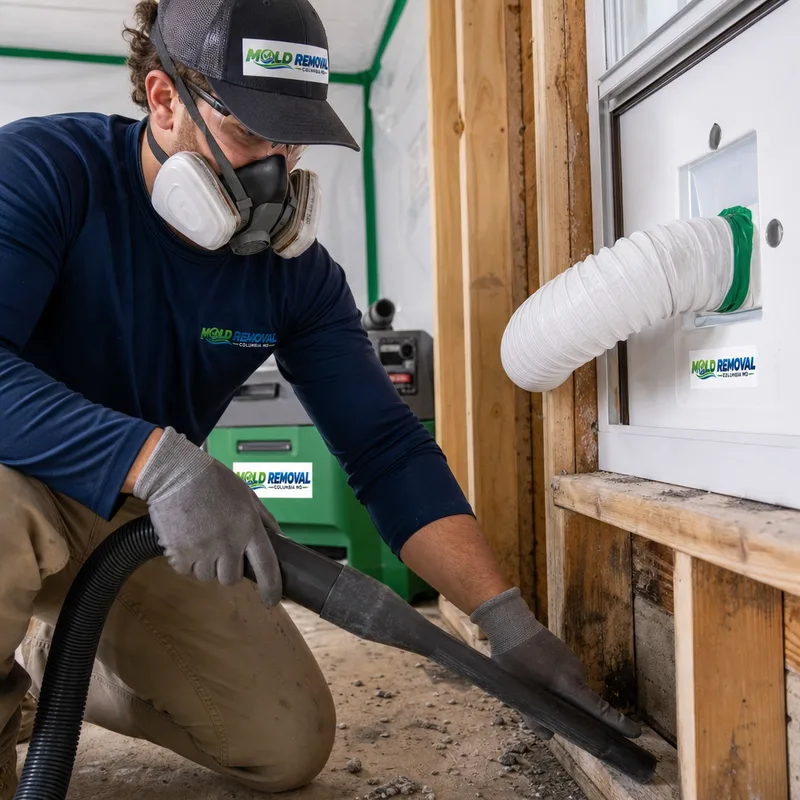
Industrial HEPA air scrubbers and HEPA vacuums are used during and after removal so debris and fine particles are captured instead of redistributed.
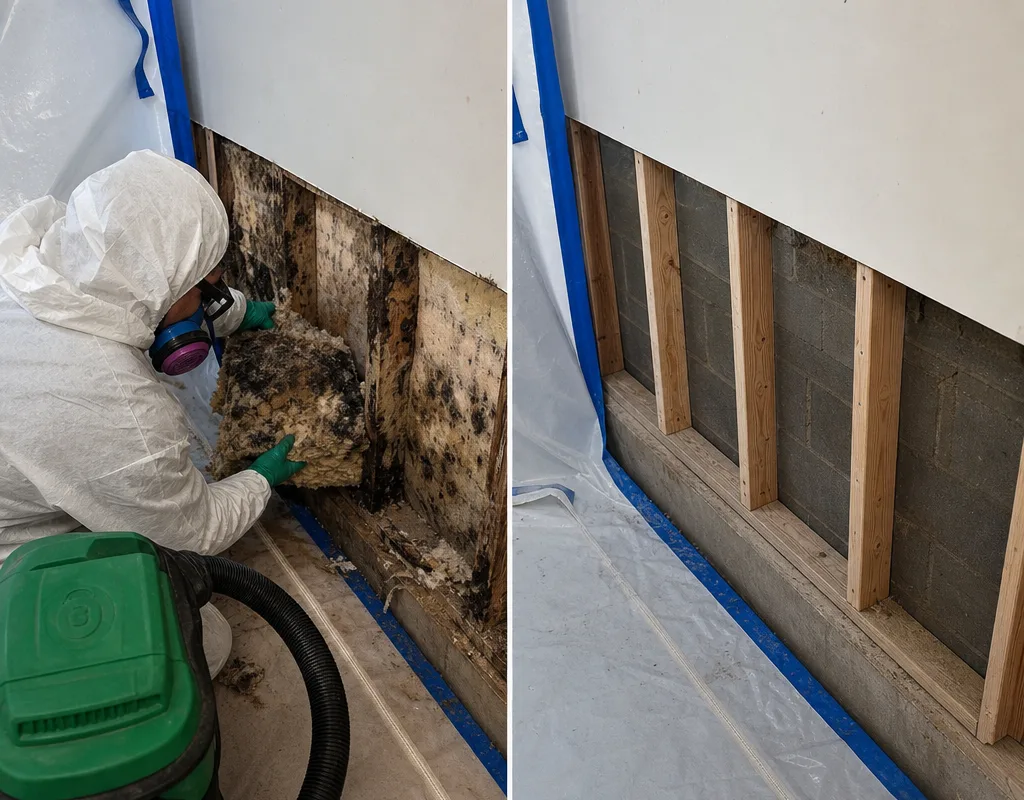
Drywall, insulation, baseboards, carpeting, or other porous materials that are significantly impacted are typically removed and bagged out under containment.
Structural wood, concrete, and other non-porous or semi-porous materials may be cleaned and treated when they are sound and can be returned to service.
Remediation works best when the leak, condensation issue, or humidity problem is addressed. We flag likely sources and what needs to be corrected before rebuild.
You should know what was done and where. We provide a written scope and practical job notes so property owners, buyers, and contractors can move forward.
Mold growth needs moisture, and in Columbia the common triggers are the same issues that show up around most of Central Maryland: basement humidity in warm months, plumbing leaks inside walls, roof or flashing leaks after heavy storms, and HVAC condensation problems.
In neighborhoods with more below-grade space and finished basements, the early warning signs are often a musty smell near utility rooms, staining at the bottom edge of drywall, or warping around baseboards after a sump pump or drain backup. In areas with townhomes and shared walls, moisture can travel and show up in closets, behind cabinets, or along party walls where airflow is limited.
Regardless of where you live in Columbia, the approach is the same: locate the wet materials, set containment, remove or clean correctly, and confirm the space is ready for drying and rebuild. Skipping steps or fogging over active growth usually leads to a repeat problem.
If you are coordinating multiple parts of a project—cleanup, drying, and repairs—it helps to start with a single written scope so every contractor is working from the same plan.
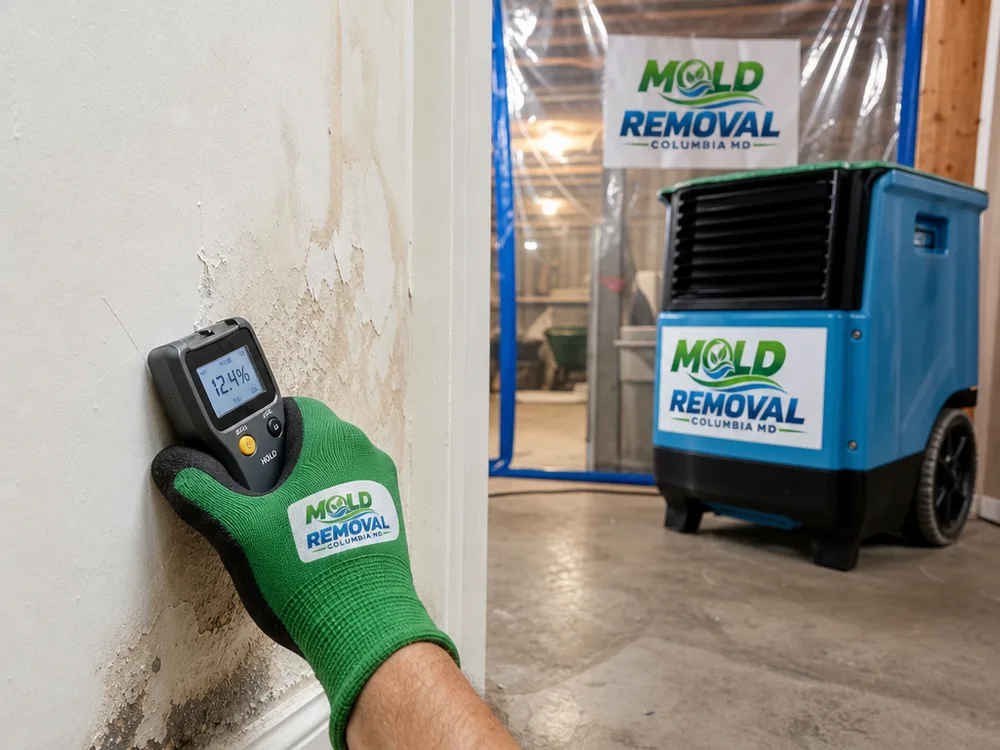
The sequence controls debris, protects adjacent rooms, and prepares the affected area for drying, verification, and repairs.
We review the affected areas, look for likely moisture sources, and outline what will be contained, removed, and cleaned. You get a plain-language scope before work begins.
We protect adjacent surfaces, establish a clean entry, and set HEPA air scrubbers. For larger or more sensitive projects, we use negative pressure to keep the work zone isolated.
Materials that cannot be reliably cleaned—often drywall, insulation, and some flooring—are carefully removed under containment, double-bagged, and staged for proper disposal.
We HEPA vacuum, wipe, and treat remaining structural surfaces as appropriate. The goal is a visibly clean surface with controlled dust and debris.
We verify the area is ready for drying and repairs, and note conditions that can cause recurrence, including active leaks, high humidity, or wet framing. If post-remediation verification is planned, we coordinate timing so the space is ready.
Mold remediation in Columbia typically ranges from about $1,500 to $6,500 for many residential projects, with small, contained areas sometimes closer to $750 to $1,500 and larger multi-room or basement jobs reaching $8,000+.
Your actual price depends on the size of the affected area, what materials are impacted, how hard it is to access the growth, the level of containment needed, and whether drying equipment is required. The exact cost is confirmed after an on-site inspection and a written scope.
Most mold remediation projects take 1 to 3 days of on-site work, then additional time for drying and repairs depending on what was opened up. A small area behind a vanity or a limited section of drywall can often be handled in a day, while a basement with multiple affected walls or heavy contents can take longer because containment, removal, and detailed cleaning must be done in stages.
If mold has penetrated porous materials like drywall and insulation, removal is usually the correct method because those materials do not reliably return to a clean, dry state. Non-porous and semi-porous surfaces such as concrete, some framing, and certain finished surfaces may be cleaned if the material is sound and the moisture source is corrected.
Often, yes, as long as the work zone can be fully contained and the affected area is not essential living space. If the remediation involves a large portion of the home, the HVAC system, or areas tied to bedrooms, we may recommend limiting access to certain rooms until cleanup is complete to reduce exposure and prevent cross-contamination.
Mold concerns related to HVAC require careful evaluation because disturbing contamination in ductwork or air handlers can spread debris quickly. We can inspect the situation and advise on the safest path, which may include isolating the system, addressing condensation or drainage issues, and coordinating specialized HVAC cleaning when it is warranted.
Stop the water source if it is active and avoid running fans that blow directly across visible growth, which can spread spores and dust. If it is safe, take photos for documentation, limit access to the area, and keep doors closed. A site inspection is the fastest way to confirm what materials are wet, what should be removed, and what needs to be dried before repairs begin.
Yes. We provide a written scope and job notes that document the work area, containment approach, what materials were removed, and the cleanup steps used. If a third-party clearance test is planned, we can coordinate timing so the space is ready for that verification after remediation.
Tell us what you are seeing—odor, staining, a recent leak, or visible growth—and where it is in the property. We will schedule an inspection, explain the containment and cleanup steps, and provide a written scope for mold remediation in Columbia, MD.