
After a leak or water event
A supply line drip, dishwasher overflow, or small roof leak can wet materials long enough for growth to start behind finishes. Testing helps determine whether affected materials are contaminated or simply stained.
Serving columbia md & surrounding areas
Mon–Fri 8am–6pm · Sat 9am–2pm
If you smell a musty odor, see staining, or had a recent leak, a proper inspection can tell you what is growing, where moisture is feeding it, and what to do next. Columbia Mold Pros provides clear testing, straightforward reporting, and practical guidance for homeowners and property managers.
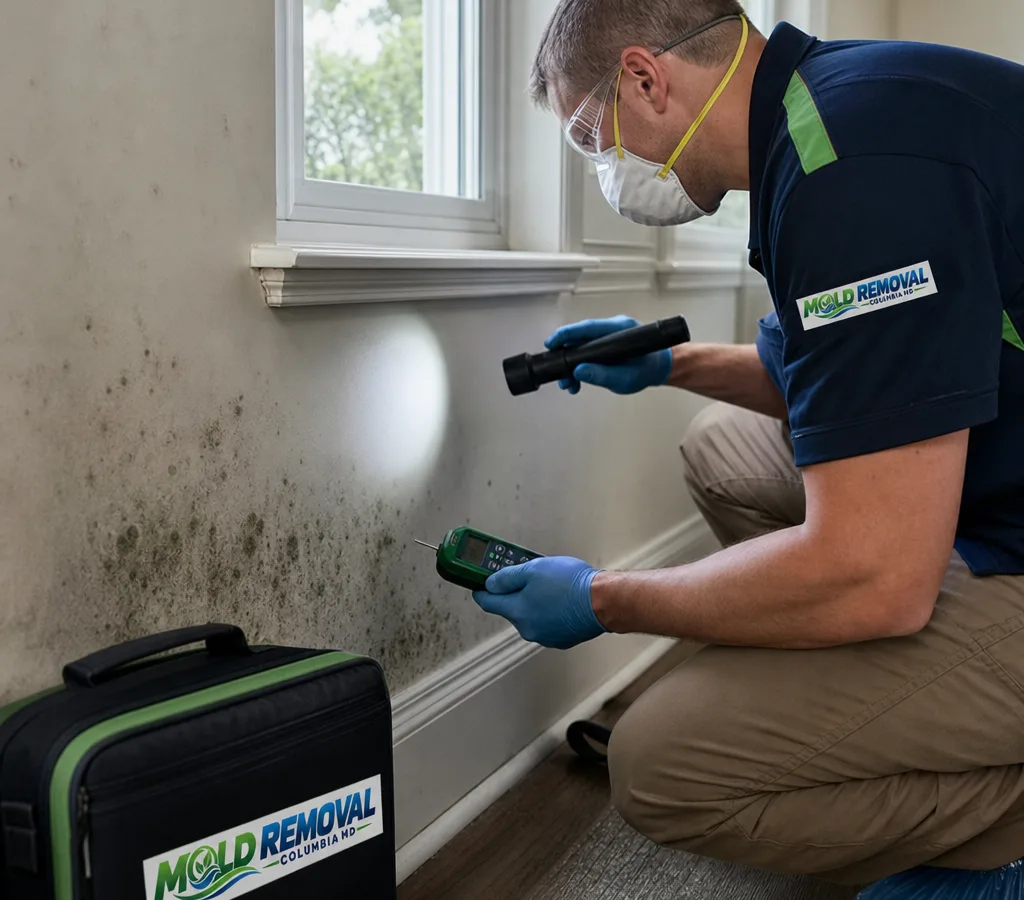
Moisture mapping and targeted testing
A real mold inspection is a decision tool. It should answer: Where is moisture coming from? What building materials are affected? Is the growth likely to be active? What areas should be contained or avoided until remediation? And if testing is performed, what did the lab identify in the samples.
It should not be a quick walk-through with a guess. Mold can hide behind baseboards, under carpet edges, inside wall cavities after a plumbing drip, or in HVAC components after prolonged humidity. The point of inspection is to connect visible clues—staining, odor, warping, and bubbling paint—to the underlying moisture pattern.
Although this service request often shows up as “mold inspection Columbia MD” online, we operate out of Columbia, MD 21044. If you are looking for help in Columbia, Maryland, you are in the right place. If you need South Carolina service, choose a local inspector licensed and insured for that market.
We start by listening to what you have noticed: when the smell started, which rooms are affected, whether there was a roof or plumbing event, and whether symptoms improve when you leave the home. Then we inspect likely moisture and growth zones such as basement perimeter walls, crawlspace access points, bathroom and laundry exhaust areas, window wells, and around supply lines.
Tools and methods commonly used during a mold inspection include:
At the end, you should have a written summary of findings, photo documentation when relevant, and clear next-step guidance. When removal is needed, the inspection results can inform containment boundaries and scope. Many clients use that information to plan mold remediation in Columbia without paying for unnecessary tear-out.
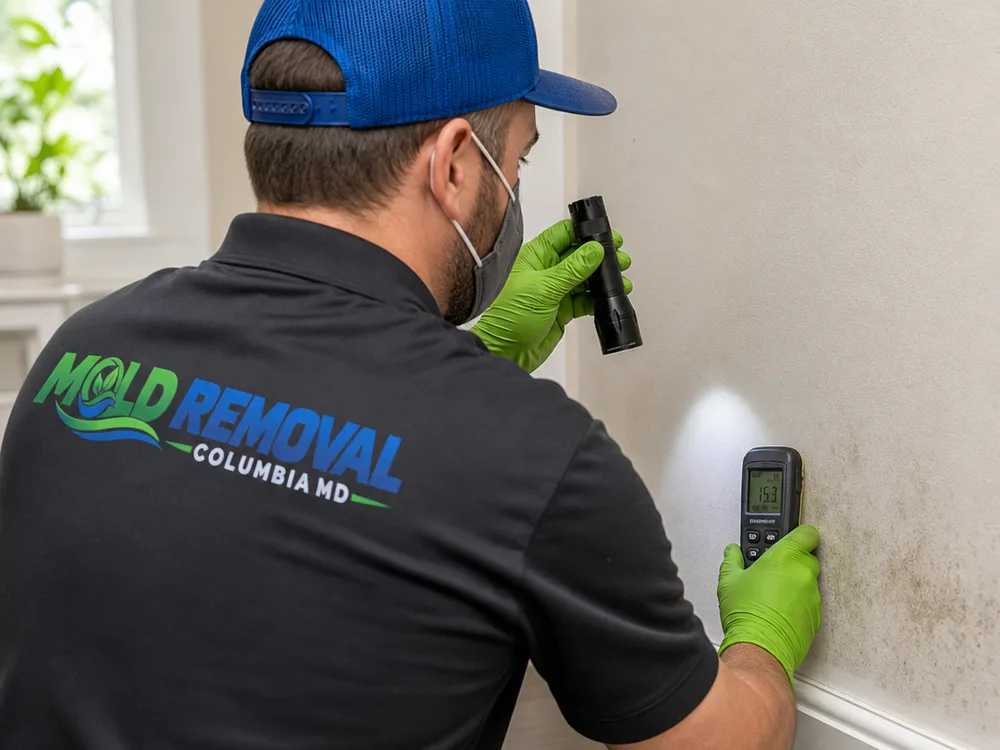
A supply line drip, dishwasher overflow, or small roof leak can wet materials long enough for growth to start behind finishes. Testing helps determine whether affected materials are contaminated or simply stained.
Odor often points to hidden growth in a wall cavity, under flooring, or in damp basement areas. The inspection focuses on tracing moisture, not just what you can see.
Not every dark spot is mold, and not every mold issue looks dark. Surface sampling can identify what is present so you can choose the right cleaning or remediation plan.
Buyers and sellers often want documentation and lab results when there is a disclosure concern, a prior water event, or visible growth in basements, attics, or utility rooms.
If occupants are reacting to indoor air, an inspection can assess whether moisture-driven microbial growth may be a contributor and recommend the next practical step.
Maryland summers can push indoor humidity high, especially in lower levels. We look for condensation points, ventilation gaps, and moisture sources that keep feeding growth.
Each step is chosen to answer a specific question about moisture, suspected growth, and the appropriate next action.
We document symptoms, odors, visible areas, past leaks, and any recent renovations or HVAC changes. This narrows the search and helps avoid unnecessary sampling.
We inspect targeted rooms and adjacent areas, take moisture readings, and note building conditions that influence drying, including basements, exterior walls, bathrooms, and laundry areas.
If testing is warranted, we choose sample types based on the question you need answered: surface identification, air comparison between areas, or confirmation of suspected hidden contamination.
Samples go to an accredited lab for analysis. Turnaround depends on lab volume, but results are typically available within a few business days.
You receive a written report summarizing findings, lab results when performed, and recommended next actions. If remediation is needed, the report supports a defined scope and containment plan.
Most mold inspections in Columbia typically range from about $250 to $650, depending on the size of the property, how many areas need to be checked, and whether sampling is included. A straightforward visual inspection with moisture readings is often on the lower end, while inspections that include multiple air and surface samples run higher.
Final pricing changes with access such as attics and crawlspaces, the number of rooms with concerns, how quickly results are needed, and how many samples are necessary to answer the question. The exact cost is confirmed after we review the situation and the inspection plan for your home or building.
In and around Columbia, moisture problems often show up in lower levels, utility rooms, and any space that stays closed up during warm, humid weather. Basements that feel cool can become condensation zones if humid outdoor air is pulled inside and meets colder surfaces. Bathrooms and laundry rooms create short bursts of high humidity that become a problem when exhaust fans are underpowered, vented improperly, or rarely used.
We also see mold concerns tied to small, slow leaks rather than dramatic floods. A minor drip behind a vanity, a loose refrigerator water line, or a poorly sealed window can feed growth for weeks without obvious puddling. The inspection is designed to catch those patterns with targeted moisture readings and careful visual checks.
If your end goal is removal, inspection first usually saves time. It helps define what materials are affected, where containment should go, and whether the issue is localized or connected to a broader moisture source.
Testing is not always necessary; a detailed visual inspection paired with moisture mapping can be enough when the growth and moisture source are obvious. Mold testing in Columbia is most useful when you need to confirm what is on a surface, compare one area to another, or document conditions for a real estate transaction or a defined remediation scope.
Most appointments take about 60 to 120 minutes, depending on home size, the number of concern areas, and whether crawlspaces, attics, or multiple HVAC zones need to be checked. If multiple samples are collected, we also need time to label, document locations, and maintain chain of custody for lab submission.
Yes. If growth is small and on a non-porous surface with the moisture issue addressed, we can outline reasonable cleaning precautions. If porous materials are affected, if there is hidden growth, or if there is enough contamination to warrant containment, we will recommend a remediation approach and the scope considerations that matter.
Leave suspect areas as-is, avoid spraying bleach or biocides, and do not disturb visible growth. If possible, make affected rooms accessible by moving a few items away from walls, clearing access to the HVAC closet, and opening basement utility areas. If there was a recent leak, share any drying steps you already took and when the water event happened.
We are based in Columbia, Maryland (21044) and serve local homeowners and property managers. If you are looking for South Carolina service, the right next step is an inspector operating locally in Columbia, SC; if you need help in Columbia, MD, we can schedule an inspection and walk you through the testing options.
Air sampling can be useful, but it is sensitive to conditions like HVAC runtime, open windows, recent cleaning, and how settled dust gets disturbed during normal living. That is why we treat air sampling as one tool, not the whole answer, and pair results with moisture findings and what we see on-site.
For inspections without lab testing, you get same-day verbal findings and next steps, with written documentation provided after. If we send samples to a lab, turnaround is typically a few business days, depending on the lab and the type of analysis requested.
Tell us what you are seeing or smelling, when it started, and which rooms are affected. Columbia Mold Pros will recommend an inspection and testing plan that fits the situation, then provide a written report you can use to decide what to do next.